Education
Dec 2022
Eon
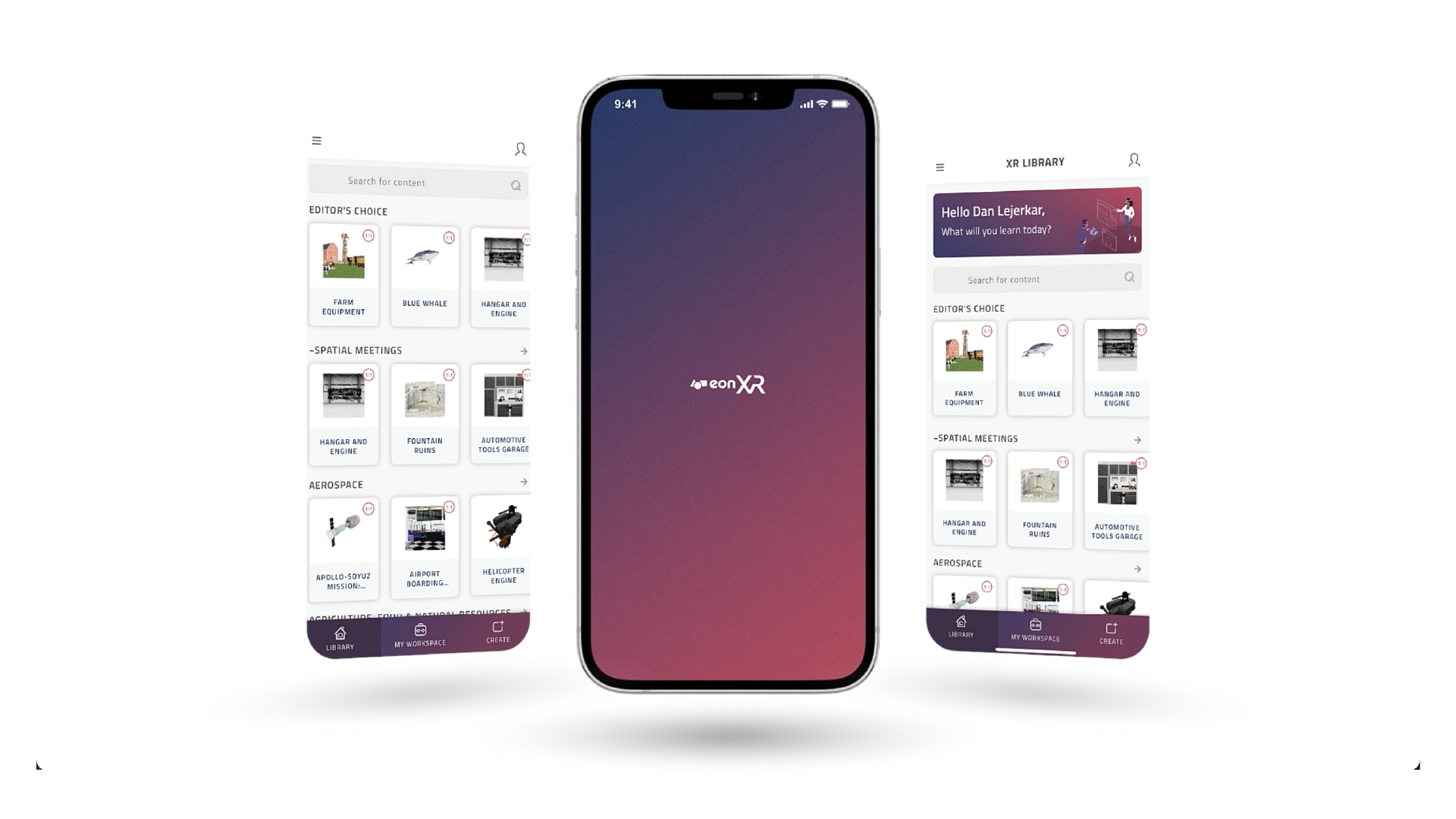
EON Reality is the leader in the Education Metaverse. The 3 products EON-XR, Spatial Meetings, and Merged-XR are SAAS options offered to individuals, companies and educational centers.
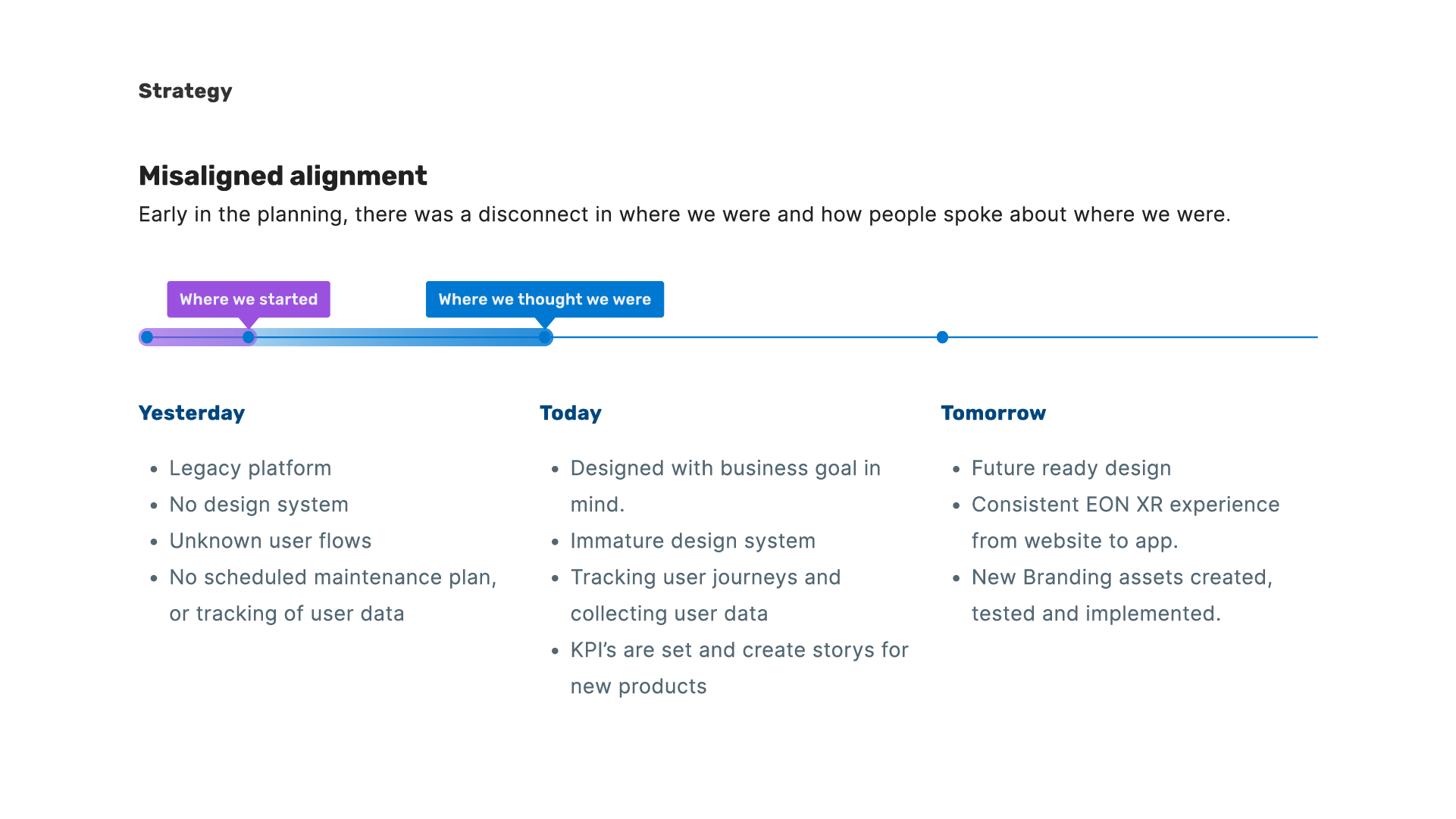
Eon Reality needed design leadership to unify its suite of enterprise experiences — balancing complex data, global deployment requirements, and accessibility — while creating consistent, intuitive interaction patterns that improved engagement and supported cross-functional scale.
As the lead designer on this initiative, I was responsible for shaping the end-to-end UX vision, driving system-level clarity, and elevating standards across products used by internal and external stakeholders. I partnered closely with product leadership, engineers, and marketing to make strategic design decisions that serve both user needs and business goals.
1. Multi-Platform ConsistencyEon’s products lived across web and mobile — each with different interaction patterns and expectations.
2. Complex Data, Complex UsersUsers needed clear pathways to understand and interact with dense information without cognitive overload.
3. Distributed CollaborationSuccess required synchronizing design thinking with engineering and product teams that spanned locations and functions.
I led workshops to align stakeholders on user journeys and the core principles that would guide design decisions: clarity, simplicity, and predictability across platforms.
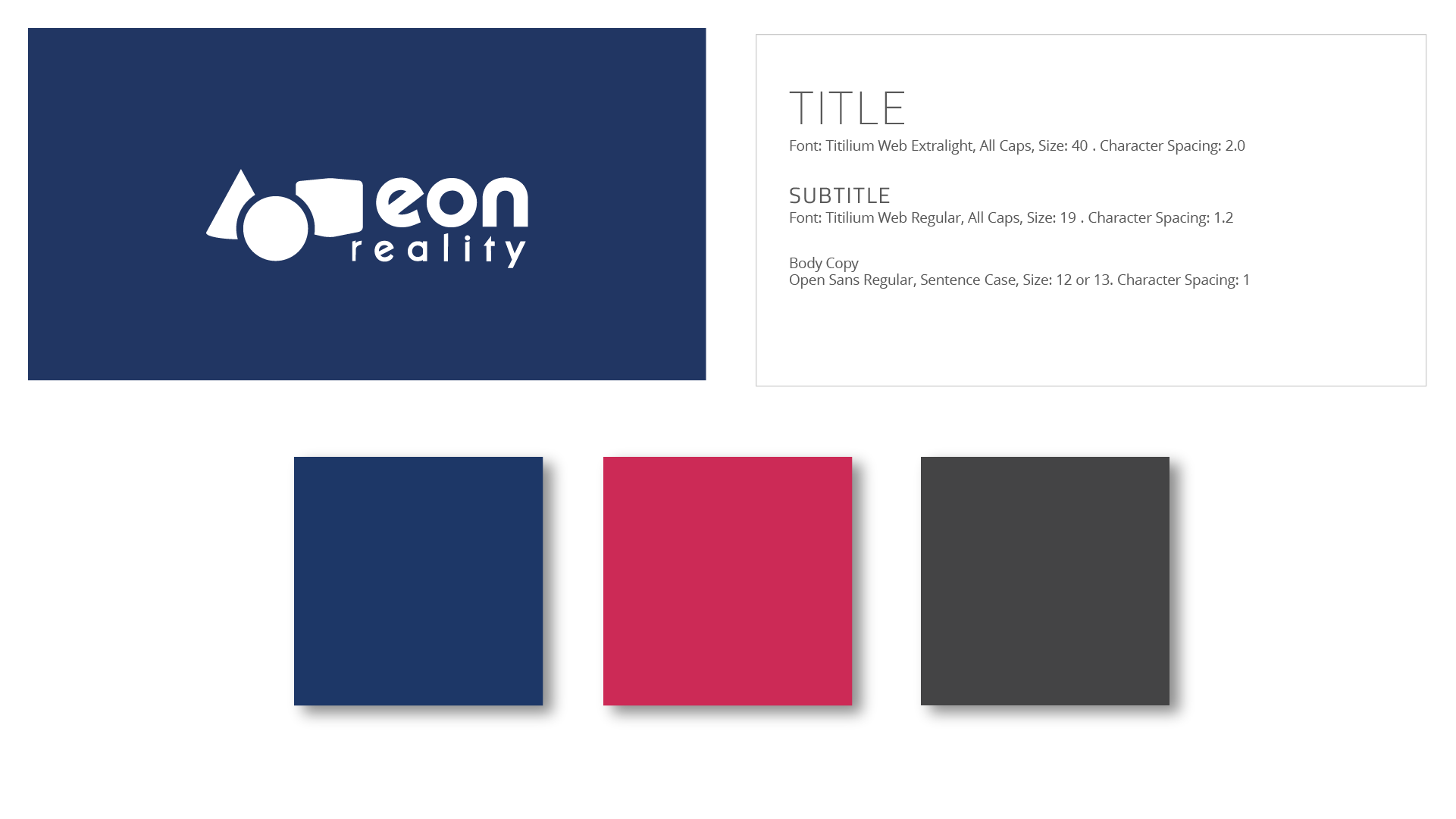
Developed a unified design language and component system that supported both web and mobile, improving visual hierarchy and reducing redundancy in design assets.
Created prototypes to validate interaction models with end users early, refining micro-interactions that reduced bounce and confusion.
Partnered daily with product, engineering, and marketing to ensure designs were technically feasible, aligned with strategic goals, and communicated clearly to implementation teams.
By elevating design thinking beyond UI polish — focusing on systems, strategy, and cross-platform harmony — the product became more intuitive, engaging, and scalable. The design system became a strategic asset that empowered cross-functional teams to build more predictably and with higher craft.